When 1.5°C Became 1.6°C: Why a Single Number Can’t Capture Climate Reality

The Headline Everyone Saw Last January, climate scientists worldwide watched the data roll in and felt that particular mixture of vindication and dread. According to the Copernicus Climate Change Service 2024 Annual Report, 2024 became the first calendar year on record where the entire twelve-month period sat at approximately 1.6°C above pre-industrial baseline temperatures. The […]

Europa Clipper’s First Flyby: What We’re Actually Learning (And Why You Probably Heard It Wrong)

The Misconception We Need to Retire You’ve likely read something in the past few months about Europa Clipper “discovering life” or “finding evidence of habitability.” These headlines are doing real damage to how we understand what just happened. When the spacecraft completed its first close approach to Jupiter’s moon Europa in spring 2025—skimming just 25 […]

Why Your Mental Model of Commercial Space is Probably Six Months Outdated

The Starship Moment Everyone Missed Here’s what I keep hearing at dinner parties: “SpaceX keeps exploding rockets, so how are they actually going to commercialize space?” The premise contains a kernel of truth wrapped in a misunderstanding about what matters. Yes, Starship had explosive test flights. But focusing on those early failures while ignoring the […]

Quantum Error Correction Just Crossed the Rubicon: What Google’s Willow Breakthrough Actually Means

The Threshold That Stopped a Decade’s Worth of Skepticism For the better part of a decade, quantum computing research operated under a cloud of legitimate doubt. Critics weren’t wrong to ask the hard question: what if adding more qubits just made things worse? The physics community had theorized that quantum error correction should eventually flip […]

Why Your Medicine Takes 4,383 Days to Reach Your Medicine Cabinet

The Molecule That Started a Decade-Long Journey In 2011, a chemist at Pfizer synthesized a compound called PF-07321332. The molecule looked promising in early tests against viral proteins. Fast-forward to December 2021, and that same compound—now called nirmatrelvir, the active ingredient in Paxlovid—got emergency authorization for treating COVID-19. Between those two moments? 4,383 days of […]

Why Google’s AlphaFold 3 Paper Changes Everything We Know About Drug Discovery (And What It Doesn’t)

The Protein Structure Problem Just Got Messier When DeepMind’s AlphaFold 2 predicted protein structures with atomic-level accuracy in 2020, the scientific community collectively held its breath. Now, three years later, the team has published their follow-up work on AlphaFold 3 in Nature, and the stakes have shifted entirely. This isn’t just about predicting how individual […]

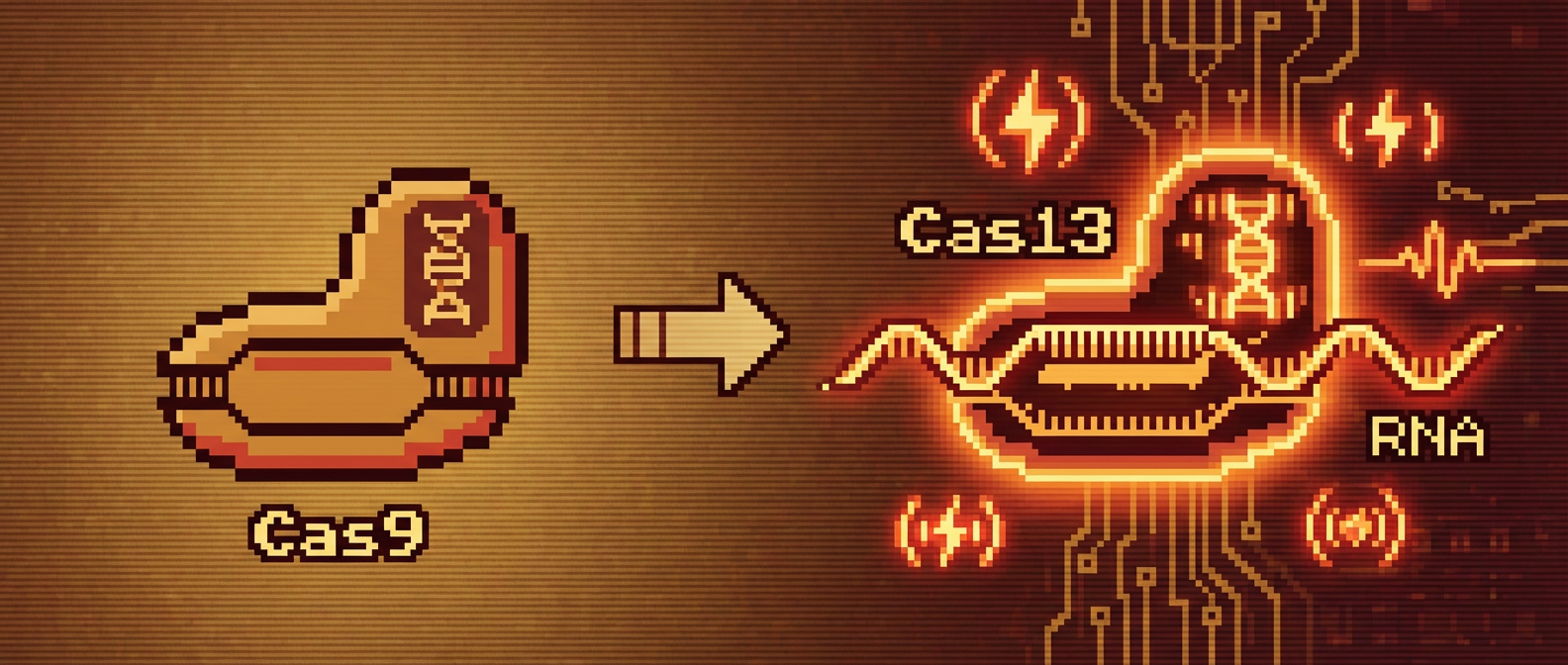
Why CRISPR-Cas13’s RNA Editing Revolution Is Finally Living Up to the Hype (And What Happened to Cas9)

The RNA Revolution That Almost Wasn’t Remember when CRISPR-Cas9 was going to cure everything? Those heady days of 2015 when every science conference buzzed with talk of precision DNA editing, when venture capital poured into gene therapy startups, when we genuinely thought we’d have designer babies and cured genetic diseases by now. Well, Cas9 didn’t […]

Why Webb’s Atmospheric Chemistry Data Changes Everything About Finding Life

The Methane Problem We Didn’t See Coming When the James Webb Space Telescope detected water vapor in the atmosphere of exoplanet K2-18 b last year, headlines celebrated another “potentially habitable world.” But buried in that same data was something more unsettling: methane signatures that don’t match our atmospheric models. Not because the detection was wrong, […]

Why Your DNA Test Can’t Predict Alzheimer’s, But Your Grandmother’s Medical Records Might

The Polygenic Score Revolution A single genetic variant tells you almost nothing about your disease risk. Take APOE4, the most famous Alzheimer’s gene variant. Having one copy increases your risk by roughly 3-fold, two copies by 8-12 fold. Sounds scary until you realize that “8-fold increased risk” still means most people won’t develop the disease. […]