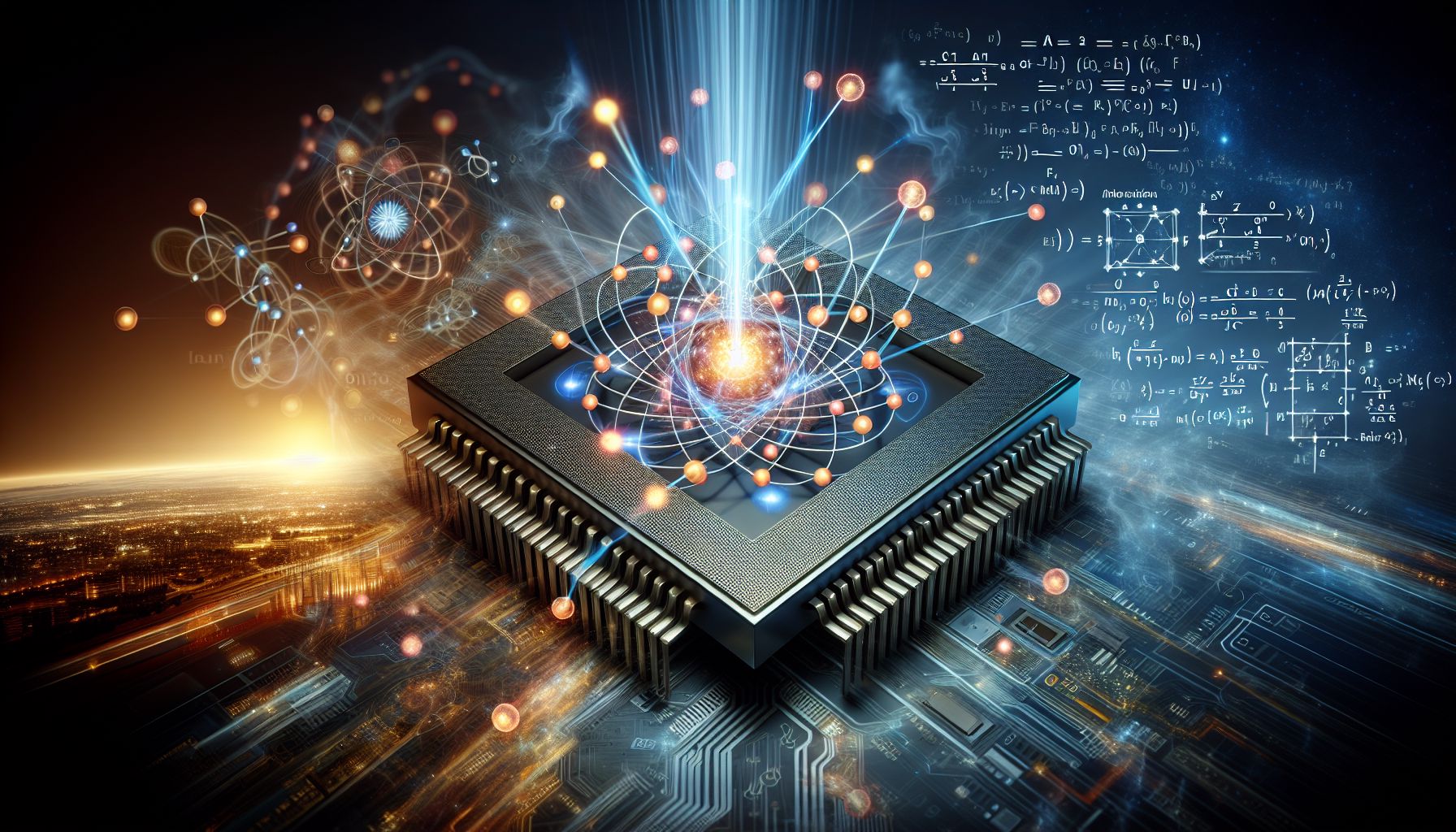
Hey tech enthusiasts! Ever heard of computing that isn’t just about zeros and ones but rather a weird dance of probabilities? Let’s talk about quantum computing—a technology that seems straight out of a sci-fi movie, but guess what? It’s very real and happening now! I promise this isn’t just another wave of hype. So grab your beverage of choice and get cozy, because we’re about to explore some seriously mind-bending stuff!
Quantum What? Understanding the Basics
Okay, so before you start thinking of this as something only Sheldon Cooper from “The Big Bang Theory” would care about, let’s break down what quantum computing is—no physics Ph.D. required.
At its core, classical computers, like the one you might be reading this on, use bits as the smallest unit of information. These bits are binary, meaning they’re either a ‘0’ or ‘1’. Quantum computers, however, take a wild jump into the subatomic world where the rules are, well, let’s just say they’re flexible. The basic unit here is the quantum bit, or qubit. And here’s the magic: qubits can exist in a state of 0, 1, or both simultaneously, thanks to a phenomenon called superposition.
I know, sounds mind-bending, right? It gets even cooler. These qubits can become entangled, meaning the state of one qubit can depend on the state of another, regardless of the distance between them. This quantum entanglement leads to computations at speeds that would make classical computers weep.
An Evolutionary Leap or Just a Nerdy Dream?
So why’s everybody buzzing about quantum computing? Think of problems that need massive computational power. Breaking complex encryption, simulating molecules for drug development, optimizing complex systems, you name it—quantum computing can potentially do all of this faster than anything we have today.
An anecdote from my side: I had this geeky friend who always used to say, “If we had a quantum computer, we could teleport around the earth.” Back then, I’d laugh it off, but seeing the rapid progress in the field, even the wildest dreams seem more plausible (let’s leave teleportation for a future blog though).
However, before your mind wanders into dreams of Star Trek, it’s worth noting that this tech is still in its early days. We’re talking about a technology at the same stage as early computers, when humans strapped vacuum tubes together just to get basic computation done. Right now, companies like Google, IBM, and startups like Rigetti, IonQ, and D-Wave are working hard to pull quantum computers from sterile lab environments into something that could actually be commercially useful.
Mind-Boggling Implications Across Industries
Let’s talk about what this could mean for different industries—because what’s a breakthrough without some wild implications, right?
- Cryptography
-
Quantum computing is basically nightmare fuel for today’s encryption algorithms. Platforms like RSA encryption could become obsolete—cracked in minutes by quantum computers because of their ability to factor large numbers rapidly. However, cryptographers are already working on quantum-resistant algorithms, so don’t worry about your Netflix login falling into the quantum void!
-
Pharmaceuticals and Healthcare
-
My friend in pharmaceuticals always jokes about how people in her field need processing power that’d make a NASA scientist sweat. Quantum computing’s ability to simulate molecular interactions with incredible precision could lead to major breakthroughs in drug discovery and genomic analysis, getting us closer to those miracle cures we keep hearing about.
-
Logistics and Transportation
- Love Amazon Prime’s quick deliveries? Thank modern logistics. Quantum computers could revolutionize how we solve logistical challenges, making delivery even more efficient and sustainable.
Challenges To Tackle First
Of course, it’s not all quantum rainbows. The technology, as exciting as it sounds, has several massive hurdles to overcome.
- Error Rates and Decoherence
-
Quantum states are incredibly delicate. Just a tiny bit of heat or a stray magnetic field can introduce errors. Scientists are working hard on error correction techniques but making a robust and reliable quantum computer is no walk in the park.
-
Scaling Up
-
Current setups can work with tens or maybe hundreds of qubits, but to unlock quantum computing’s full potential, we’d need millions. The journey from laboratory curiosities to industrial workhorses is loaded with technical and practical challenges.
-
Economic Barriers
- Getting into quantum isn’t for anyone with shallow pockets. The companies leading the effort are investing billions, and while costs will eventually come down, it remains an area where only the big tech giants and well-funded startups can play, at least for now.
The Speculative Crystal Ball: Where Are We Heading?
Now, let’s peer into the speculative future with our crystal ball (not really made of crystal, of course—patent pending).
Imagine a day when quantum processing units (QPUs) are as common as GPUs. You’d order one from your local electronics store for personal scientific exploration or maybe even render some real-time holographic TikToks! Of course, I’m mostly joking (or am I?). While integrating quantum into everyday tech might take decades, more immediate impacts could involve cloud services with quantum processing capabilities from companies like Google Cloud or IBM’s Quantum Experience.
The global balance could shift significantly too. Nations investing heavily in quantum tech (China, I’m looking at you) might edge ahead in cybersecurity, AI, and economic leverage. It’s like a real-world game of thrones playing out in research labs.
Conclusion: Will We Weather the Quantum Storm?
As I wrap up, you might ask—what should you take away from all this quantum hullabaloo? Well, first, the transformation here feels fundamental, much like the transition from steam to electricity. It’s not just about speed—it’s a completely new world of possibilities and problems. Quantum computing could redefine industries, economic power structures, and even our everyday tech interactions.
So, if you’ve stuck through this quantum trip, congrats! You’re now a step ahead in understanding a technology that just might define the next few decades. Keep your geek radar up, because the quantum future is approaching fast, packed with both bewildering challenges and mind-blowing opportunities. Happy exploring!
P.S. If there’s a tech rabbit hole you want to jump down, feel free to drop me a message—let’s keep this nerdy conversation going!