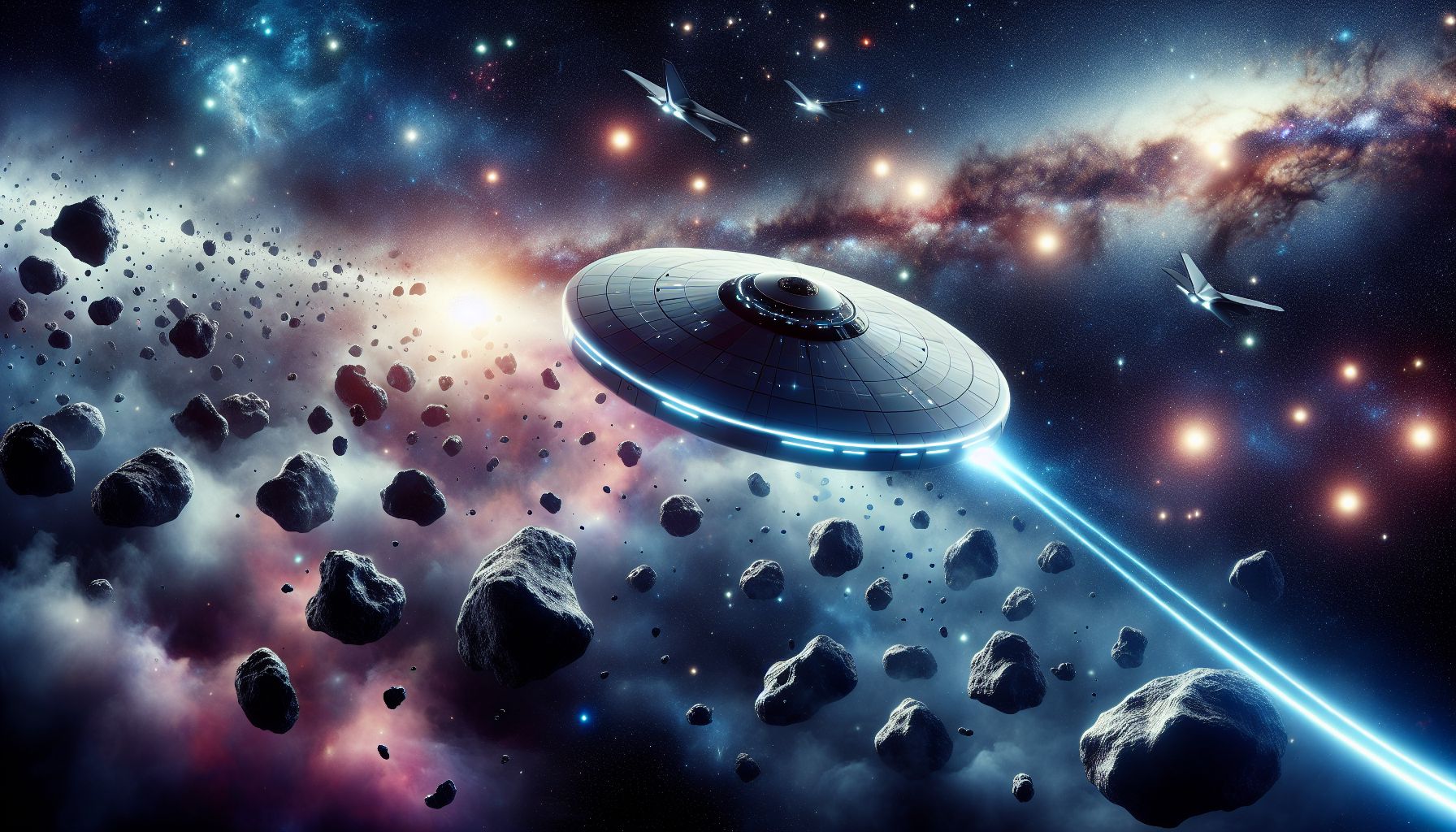
Hey there, fellow tech wanderers! Ever find yourself gazing up at the night sky, feeling a little like a tourist without a travel brochure? If so, you’re not alone. Space travel has long been the playground of brave astronauts, questionable astronaut food decisions, and, more recently, a few billionaires pretending it’s a casual Wednesday. But hold onto your zero-gravity hats, folks, because we’re stepping into a new era where space travel might just be the next frontier for us all.
A Brief History Detour
Before we dive into what’s happening now and what might come next, let’s take a quick stroll down memory lane. Space travel isn’t a new kid on the block. A lot of serious rocket science went into getting us here, and let’s not forget our grandparents watched in wonder as men first walked on the moon. Fast forward a few decades later, and it feels like every other day, someone or something is reaching for those sparkly stars.
Sure, we’ve got companies like SpaceX launching rockets that land safely back on Earth, rather than nosediving into the ocean like expensive fireworks. Blue Origin might sound sci-fi, but it’s giving SpaceX a run for its money with sub-orbital jaunts. But right now, I want to chat about something that’s setting this era apart. You guessed it: democratized space travel.
The Democratization of Space: It’s No Longer Science Fiction
The dream of space travel is expanding faster than the universe itself (well, almost). It used to be that if you weren’t a chosen astronaut or a physicist with a wardrobe full of white lab coats, you were grounded. But now, companies are promising that regular folks like you and me could one day book a space flight as easily as picking up concert tickets.
Take Virgin Galactic, for example. Richard Branson’s venture into the space tourism market promises a space ride that, while priced like a luxury car, is becoming a somewhat conceivable daydream for the well-saved. In 2021, Branson himself took a joyride in the ship, and I couldn’t shake the feeling that mankind had taken a giant leap towards turning space travel as accessible as our beaches or mountains.
Tech Advances Fueling Accessibility
Of course, the reality of having your shoes untied in zero-g doesn’t just happen with wishes. Behind the curtain, a lot of gnarly tech is pushing the boundaries of what’s possible. Reusability is the name of the game. Rockets that are basically spacefaring Ubers, only cooler. By making rockets reusable, costs drop, making launches more affordable and frequent.
AI plays a big role in automation, ensuring that everything from navigation to landing happens with precision. With companies developing space habitats (I’m talking of those futuristic bubble-shaped colonies people use as meme material), AI might one day manage entire environments. Making sure that what you ordered was actually artisanal coffee and not something that resembles moon dust.
The Implications: Thrills, Science, and Musk-Delivered Pizzas?
So what happens now that we’re basically packing our virtual suitcases for space hotels? Space tourism isn’t just about sending Snapchat stories from orbit. It’s about opening a new chapter for science. Imagine the possibilities when researchers no longer need to squeeze experiments into tiny capsules and pray that the data survives re-entry.
On a lighter note, can you imagine a zero-gravity dance party? Come on, who wouldn’t be pumped about that! And don’t get me started on space food. It has to get better than that dehydrated ice cream, right? With major players like SpaceX considering these aspects seriously, it wouldn’t be shocking if we see commercialization in the more bizarre aspects, like a cosmic food delivery app. (Cue image of pizzas floating in a capsule.)
The implications go beyond our amusement. New sectors emerging from space travel could generate massive amounts of data about Earth, its atmosphere, and beyond. It might even spark a global drive towards space ethics. How do we handle waste, operate with minimal footprints, or even define ‘space property’? Space Yugoslavia, anyone?
Not Without Challenges: Blasting Through the Red Tape
As electrifying as it is to speculate about sipping fancy cocktails in space (and count me in!), the road is far from frictionless. There are regulatory hoops to jump through, and loads of red tape trying to tether these dreams down like they’ve got helium.
Apart from the typical government and aviation hurdles, there’s the grand question of sustainability. If we truly want an infinite number of space joyrides, we’d better figure out not just how to get there, but how to keep extraterrestrial travel as eco-friendly as possible. Space debris and pollution might soon scream “Houston, we’ve got a problem!”
Inching Closer to Stars: What’s Next?
So where does this trajectory leave us? Well, if the past decade is anything to go by, our cosmic escapades will only intensify. As tech becomes more sophisticated, we might soon see deals involving Corporate Space Credits popping up alongside frequent flyer points. And don’t discount the idea of quirky space stations being branded like theme parks, though I’d pass on a Luna Park replica in orbit!
I sometimes wonder if we’ll end up binging space travel the way we do TV (imagine the subscription costs). Yet, it’s almost certain that interesting times lie ahead as rapid progress meets human curiosity and innovation.
All said and done, whether you’re a thrill-seeker yearning to break orbit or simply a fan of the stars, we’re living in a pretty wild chapter of human history. The possibilities are quite literally astronomical. Anyway, time to give those celestial postcards some thought. You’re going to need something to send back home from your Outer World vacation.
Until next time, keep looking towards the cosmos! Stay starstruck, folks.
P.S. If you ever find yourself needing company on your space voyage, hit me up. I’ll bring the Bluetooth speaker; trust me, gravity-free slow dancing to space-themed tunes sounds like a cosmic blast!