Hey tech enthusiasts!
Today, we’re diving into something that’s been making waves in both the tech world and creative arts—Artificial Intelligence. And I’m not talking about AI crunching numbers or optimizing databases. I mean AI as a creative partner, a digital collaborator that’s changing how we make art. If Picasso and Turing had a baby, AI in the creative arts would probably be it. So grab your favorite mediocre cup of coffee (brewed by yet another version of Skynet’s cousin), and let’s dive in!
AI – The New Art Student
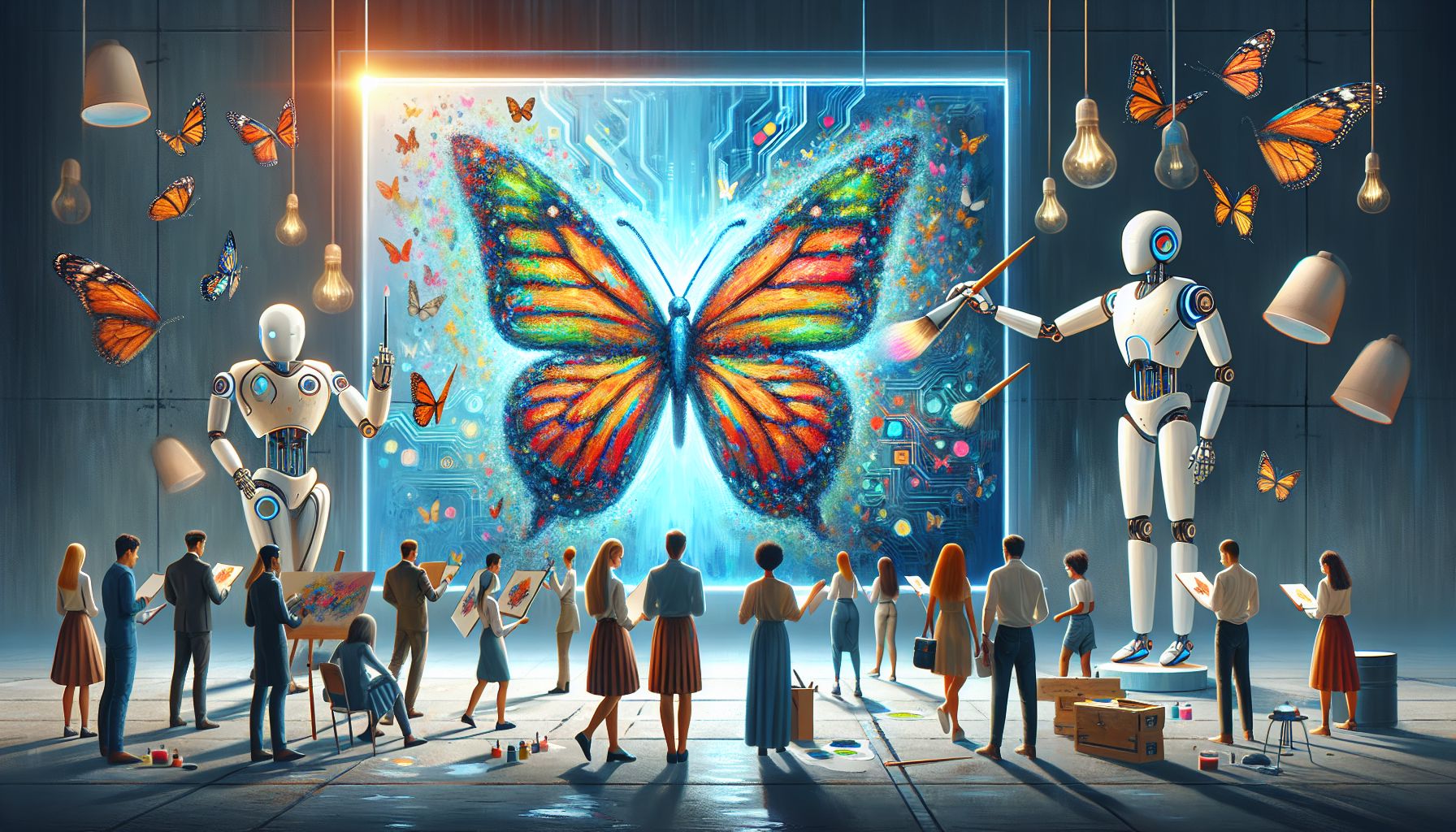
So what’s actually happening here? Artificial Intelligence isn’t just some obscure tool for geeks in dimly lit labs anymore. It’s pushing its way into art, writing, music, film, and design like an overeager art student who’s being graded on creativity rather than technique.
From Text to Art: DALL-E and the Magic Wand
You’ve probably heard of OpenAI’s DALL-E (and its successors). If not, think of it as a digital artist that creates visuals from text prompts. Seriously. Type “cybernetic Mona Lisa wandering through a neon rainforest” and boom—you get a digital masterwork.
What gets me is how easy it is. These tools make visual art accessible to anyone with a keyboard. Will this replace human artists? I doubt it. But it’s definitely democratizing creativity, letting your inner Van Gogh shine without years of brush practice or that whole severed ear situation. The creative floodgates are wide open, and honestly, it’s pretty wild to watch.
Soundtrack to the Future: Music and AI Symphony
Now let’s talk music. AI isn’t stopping at paintings and graphics. Remember humming a song idea but having no clue how to turn it into actual music? That’s where our digital friend comes in.
AI algorithms from companies like AIVA are composing symphonies that would make Bach do a double-take. Sure, purists will say “robots have no soul.” And they might be right (for now). But these algorithms are learning patterns, absorbing music theory, and sometimes creating pieces no human ears have heard before.
Here’s how it works: these AI systems consume massive amounts of musical data, find patterns, then generate completely new compositions. It’s like teaching your dog to fetch, except instead of a tennis ball, it brings back a fully orchestrated symphony. Good boy, algorithm!
The Words are Mightier: AI in Writing
And then there’s writing—my personal favorite topic. With tools like GPT-3 popping up everywhere (seriously, they’re multiplying like Black Mirror episode plots), AI is becoming a writing collaborator. It’s not just helping with emails and essays anymore. We’re talking novels, journalism, even poetry.
For some, this is the future of content creation—humans and machines co-writing, each bringing what the other can’t. Picture a sci-fi novel where humans handle emotional depth while AI fills in the technical details about interstellar travel or alien languages. Weird? Maybe. But it could also mean richer stories and faster publishing.
Creative Synergy or Automated Asylum?
Here’s the million-dollar question: Is AI in art collaboration or creative theft? While it’s tempting to go full utopian or dystopian, the reality probably sits somewhere in the messy middle.
Challenges and Ethical Musings
There are real problems here. Copyright and ownership issues alone could keep lawyers busy for decades. Who owns an AI-generated masterpiece? The programmer? The company? The machine itself? Solving this needs more than a conference room—it needs a miracle and a lot of caffeine.
Then there’s the authenticity question. If a machine can generate in minutes what takes humans months, does that diminish the value of human-made art? Some worry we’re losing the “humanity” in creative work, and honestly, I get it.
Future Possibilities
But here’s the thing—AI doesn’t have to kill creativity. It might actually supercharge it. Imagine art schools teaching students to master AI tools alongside traditional techniques. A new generation where success isn’t just what humans can do alone, but what we can achieve together with AI.
And think about specialization. AI handles the tedious stuff—photo touch-ups, first drafts, background music—freeing humans to focus on big ideas, innovation, and refinement. That sounds like a pretty good creative partnership to me.
Bridging the Digital Canvas
At the end of the day, AI and art feels like something straight out of a sci-fi novel. It’s this possibility sitting just ahead of us, where traditional boundaries disappear and creativity explodes in directions we never expected.
Yeah, there are ethical puzzles, authenticity debates, and plenty of philosophical hand-wringing. But isn’t that what real innovation always brings? Boundary-pushing, big questions, and completely new chapters for humanity.
So as we navigate this brave new world, keep your paintbrushes ready, your instruments tuned, and your AI tools handy. Because automatic or not, the heart of creativity is still human—driven by our endless need to explore and make sense of everything around us.
Until next time, keep dreaming and creating. Skynet doesn’t own imagination yet!