Our Planet’s Greatest Mystery Lies Beneath the Waves
Imagine if we had detailed maps of less than twenty percent of Earth’s land surface. Picture trying to understand global weather patterns while missing four-fifths of the data. This is exactly where we stand with our oceans, where roughly eighty percent of marine environments remain unexplored and unmapped at high resolution. We’ve sent rovers to Mars and telescopes to the edge of the observable universe, yet the deepest parts of our own planet remain largely unknown territories.
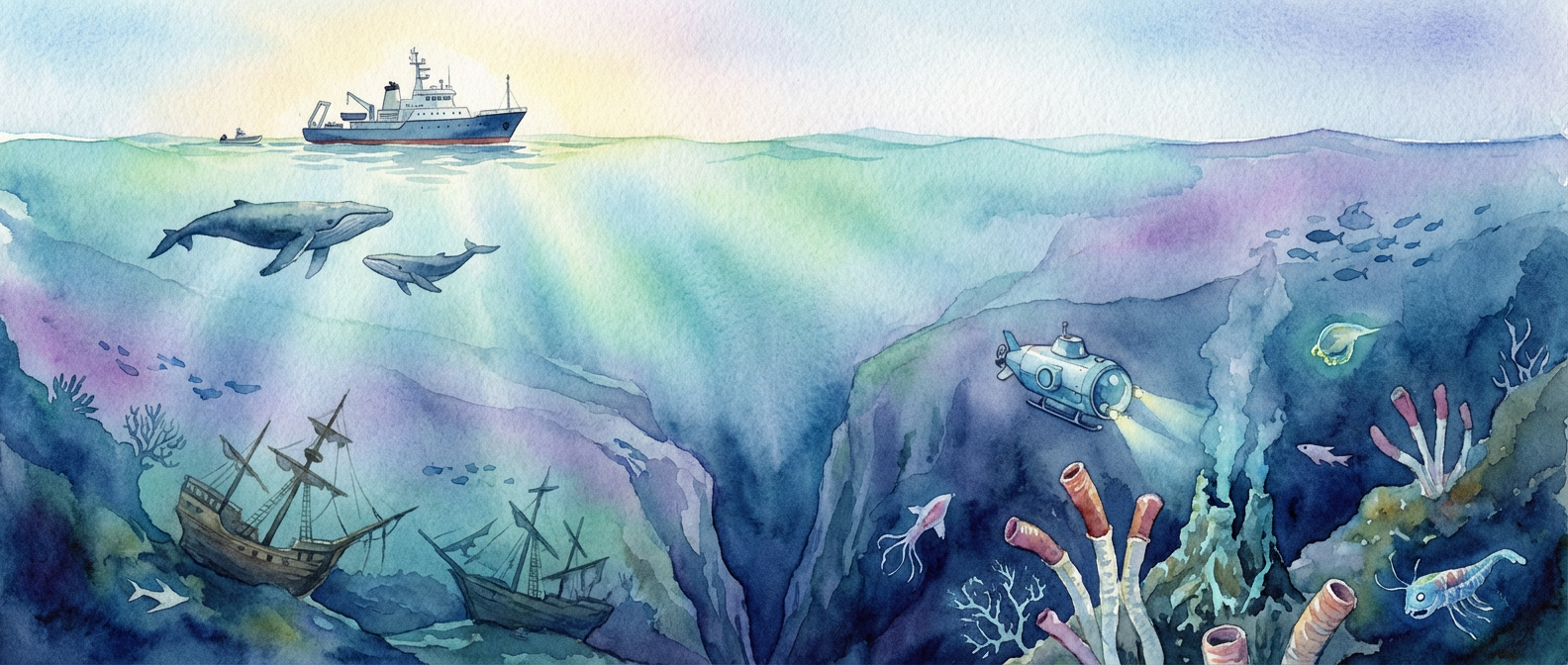
This knowledge gap goes beyond scientific curiosity. The deep ocean drives global climate patterns, hosts vast ecosystems, and may hold solutions to challenges ranging from medicine to sustainable energy. Yet our ignorance of these depths leaves us vulnerable to making catastrophic mistakes in how we manage and protect these environments. Human activities are increasingly reaching into the abyss, and frankly, we’re operating blind.
A Gold Rush in the Deep
Commercial interests are eyeing the ocean floor with unprecedented intensity. Deep sea mining proposals have exploded in recent years, targeting nodules rich in rare metals essential for renewable energy technologies. These potato-sized formations took millions of years to develop on the seafloor and contain cobalt, nickel, and other materials necessary for electric vehicle batteries and wind turbines.
Marine biologists worldwide are sounding alarm bells about these extraction plans. The deep seafloor hosts unique ecosystems that evolved in extreme isolation, developing over geological timescales. Unlike terrestrial mining sites, which can potentially recover within decades, deep sea environments may require centuries or millennia to regenerate after disturbance. The International Seabed Authority faces mounting pressure to approve mining permits while scientists argue we lack sufficient data to predict the ecological consequences.
This tension between economic opportunity and environmental protection highlights a fundamental problem: we’re making decisions about ecosystems we barely understand. In environments where mistakes could prove irreversible. I find it deeply troubling that we’re rushing to industrialize habitats we haven’t even properly explored yet.
Biodiversity Bonanza in Earth’s Basement
Even with limited exploration, the deep ocean continues to astonish researchers with its biological richness. Scientists discover approximately two thousand new marine species each year through deep ocean surveys, revealing ecosystems of remarkable complexity and beauty. These discoveries include bizarre fish with transparent heads, tube worms that thrive in scalding volcanic vents, and microorganisms that survive in conditions previously thought impossible for life.
Many of these organisms have unique biochemical properties with potential applications in medicine, biotechnology, and materials science. Deep sea sponges produce compounds being investigated as cancer treatments. Extremophile bacteria from hydrothermal vents offer insights into industrial processes that operate under harsh conditions. Some deep sea creatures live for extraordinary lengths of time, potentially holding clues for understanding aging and developing life-extension therapies.
The rate of discovery suggests we’ve only scratched the surface of deep ocean biodiversity. MBARI ocean research consistently reveals new species and ecosystems during every expedition to previously unexplored regions. Each discovery expands our understanding of life’s possibilities and our planet’s biological heritage.
Chemical Changes at Breakneck Speed
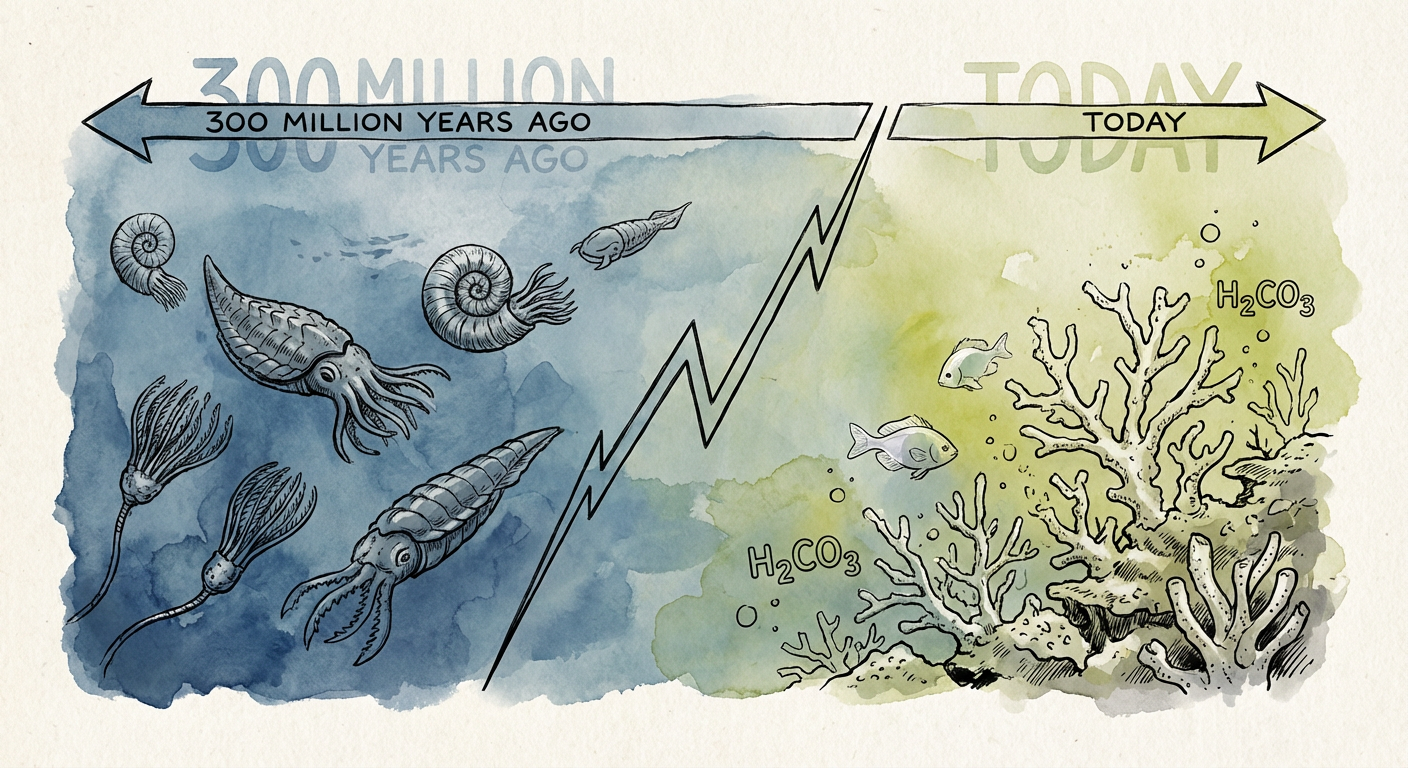
While we’re discovering new life in the deep ocean, we’re simultaneously altering the chemical foundation that supports it. Ocean acidification is happening at the fastest rate documented in paleoclimate records spanning three hundred million years. As seawater absorbs increasing amounts of carbon dioxide from the atmosphere, its chemistry shifts in ways that threaten marine life from surface waters to the deepest trenches.
The deep ocean doesn’t exist in isolation from surface processes. Water masses formed at the surface eventually sink to great depths, carrying chemical signatures that reflect current atmospheric conditions. This means that today’s rapid atmospheric changes will influence deep sea chemistry for decades or centuries to come, even if we drastically reduce emissions immediately.
Acidification particularly threatens organisms that build shells or skeletons from calcium carbonate, including many species that form the backbone of deep sea food webs. The effects cascade through ecosystems in ways that researchers are only beginning to understand. NOAA Ocean Service monitors these changes, but the speed of chemical transformation outpaces our ability to study its full implications.
Technology Revolutionizing the Abyss
Autonomous underwater vehicles are transforming deep ocean research by dramatically reducing both costs and risks associated with exploration. These robotic explorers can spend months in the deep sea, gathering data continuously while human researchers remain safely on the surface. Advanced sensors allow them to detect chemical gradients, map seafloor topography, and even collect biological samples without direct human intervention.
Yet even with these technological advances, sobering discoveries continue to emerge from the deepest places on Earth. Surveys conducted since 2019 have documented plastic pollution in the Mariana Trench at depths exceeding eleven kilometers. These findings show that human influence reaches even the most remote corners of our planet. Microplastics now contaminate organisms living in trenches that were formed millions of years before humans evolved.
The presence of synthetic materials in Earth’s deepest places is a stark reminder that no environment remains untouched by human activity. It also shows how interconnected ocean systems really are, where pollution introduced at the surface eventually reaches the most isolated deep sea habitats.
Charting a Course for Ocean Stewardship
The deep ocean stands at a crossroads between opportunity and crisis. Our technological capabilities for exploration and exploitation are advancing rapidly, while our scientific understanding lags behind the pace of proposed industrial activities. The decisions we make in the next decade will determine whether these vast ecosystems remain intact for future generations or become industrial sacrifice zones in the name of economic development.
Understanding our ocean’s depths isn’t just about satisfying scientific curiosity. It’s about making informed decisions that affect climate regulation, biodiversity conservation, and sustainable resource management for billions of people. Every expedition into the abyss reveals new connections between deep sea processes and global systems that support life on Earth. We need comprehensive ocean exploration now more than ever, before it’s too late to protect what we’re only just beginning to discover.